
Maximizing ROI: Why High-Efficiency Solar Panels are Essential for Nigerian Businesses

The energy landscape in Nigeria is undergoing a seismic shift. For decades, businesses and households relied heavily on a fragile national grid and expensive, polluting diesel generators. However, as we move through 2026, the narrative has changed. With persistent grid instability and the skyrocketing costs of fossil fuels, solar energy has transitioned from being a niche luxury for the affluent to an absolute economic necessity for everyone. Nigerians are now looking for sustainable ways to power their lives, and high-efficiency photovoltaic (PV) systems are at the forefront of this revolution. Maximizing your Return on Investment (ROI) in this sector requires more than just buying panels; it demands a strategic understanding of technology, climate, and maintenance.
**Understanding Solar Efficiency: Monocrystalline vs. Polycrystalline**
When investing in solar, the type of panel you choose determines the ceiling of your system’s performance. In the Nigerian market, you will primarily encounter two types of silicon-based panels: Monocrystalline and Polycrystalline.
Monocrystalline panels are made from a single crystal structure, which allows electrons more room to move, resulting in higher efficiency rates—often exceeding 22%. They are sleek, dark, and perform exceptionally well in the high-intensity sunlight found across Nigeria. Polycrystalline panels, identifiable by their blue, speckled look, are made from multiple silicon fragments melted together. While they are generally more affordable upfront, their efficiency is lower (typically 15-17%).
For Nigeria’s tropical climate, high-efficiency monocrystalline panels are crucial. Our environment experiences high ambient temperatures which can actually degrade the performance of lower-quality panels. Investing in premium, high-efficiency modules ensures that you capture the maximum amount of energy even during shorter winter days or overcast rainy seasons.
**Factors Influencing Performance in the Nigerian Context**
Operating a solar system in Nigeria presents unique challenges. First is heat tolerance. Every panel has a “temperature coefficient”—a measure of how much power output drops for every degree the temperature rises above 25°C. High-quality panels have a lower coefficient, meaning they lose less power in the scorching heat of Maiduguri or the humid warmth of Lagos.
Second is the Harmattan season. Dust accumulation on panels can reduce efficiency by as much as 30% in a matter of weeks. Choosing panels with advanced anti-reflective and anti-soiling coatings can mitigate some of this, but it also underscores the need for localized maintenance.
Lastly, the importance of high-quality inverters cannot be overstated. The inverter is the “brain” of your system, converting DC power from the panels into the AC power your appliances use. A cheap inverter can waste up to 15% of your generated power through heat loss and poor conversion. In 2026, smart inverters with AI-driven MPPT (Maximum Power Point Tracking) are essential for squeezing every drop of ROI out of your installation.
**ROI (Return on Investment): The Economic Case**
The most common question from Nigerian homeowners and business owners is: “When will I see my money back?” With the current cost of diesel and the revised electricity tariffs, the payback period has shortened significantly.
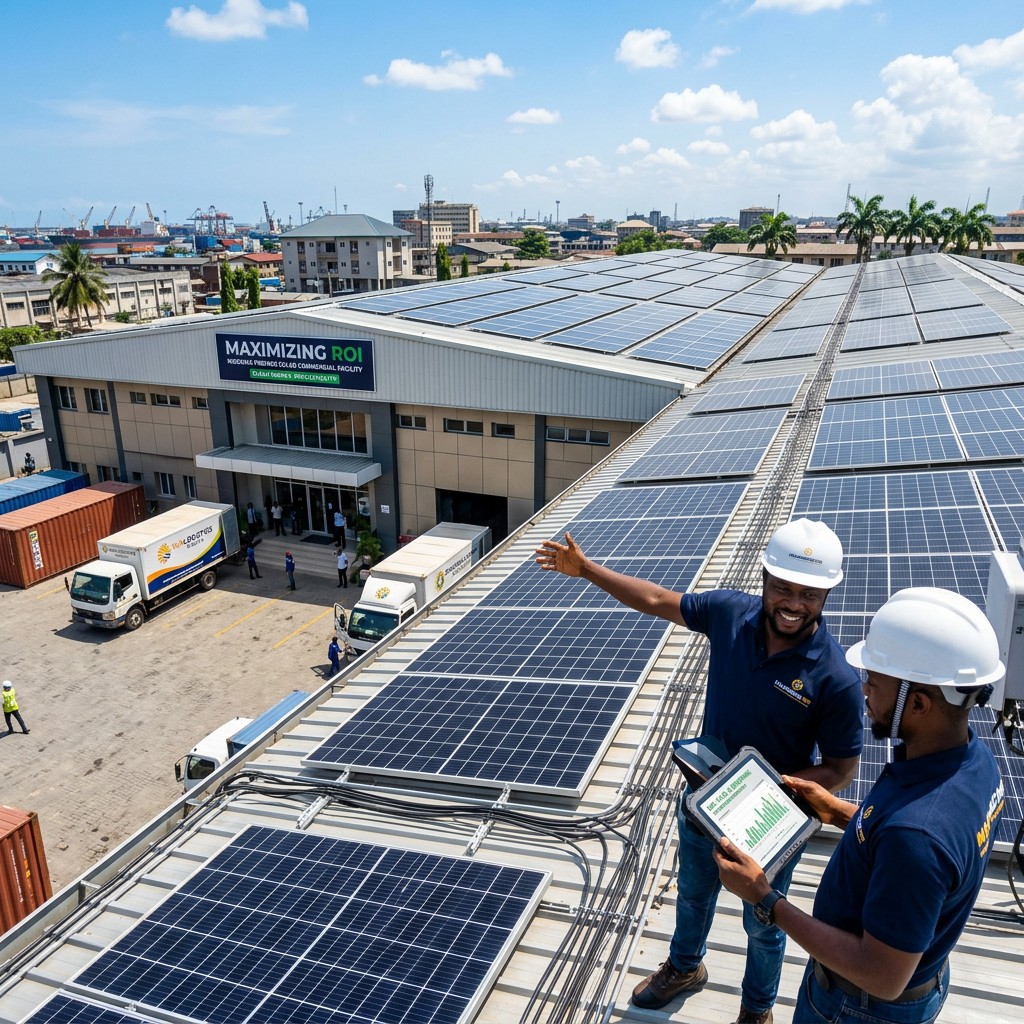
For a medium-sized business replacing a 20kVA diesel generator with a high-efficiency solar hybrid system, the ROI is typically realized within 3 to 5 years. This calculation accounts for the elimination of daily fuel purchases, reduced generator maintenance costs, and the avoidance of high-tier “Band A” electricity bills. After this initial 3-5 year window, the electricity produced by the solar system is essentially free for the remainder of the panels’ 25-year lifespan. This represents a massive hedge against inflation and energy price volatility.
**Maintenance: Ensuring Longevity and Peak Performance**
To protect your investment, a proactive maintenance schedule is mandatory.
1. **Regular Cleaning:** During the dry and Harmattan seasons, panels should be cleaned with soft brushes and deionized water at least once a month.
2. **Monitoring:** Use mobile apps provided by modern inverter systems to track daily yields. A sudden drop in performance often indicates a shading issue or a faulty string that needs immediate attention.
3. **Professional Inspections:** Once a year, have a certified technician check the wiring, battery health, and mounting structures to ensure everything is secure against Nigeria’s heavy storm winds.
**Conclusion**
Transitioning to solar is the smartest financial move a Nigerian entity can make in 2026. However, the market is flooded with sub-standard components that promise much but deliver little. To truly maximize your ROI, you need a system designed for the local climate using world-class components.
Choosing a reliable partner like Twerd.ng is essential. We don’t just sell panels; we provide end-to-end energy solutions tailored to the specific needs of the Nigerian environment. From high-efficiency N-type monocrystalline panels to industrial-grade storage solutions, Twerd ensures that your journey toward energy independence is profitable, sustainable, and hassle-free. Invest in the future today with Twerd.ng.